
We get this question constantly. Usually it comes in over the phone, sometimes it’s the first line of an email: how much does a website cost? And honestly, we can’t just throw out a number without knowing more, because a freelancer’s one-page portfolio and a store selling a hundred products aren’t remotely the same job. A lot of people walk in already expecting a figure, something a cousin paid two years ago, or a screenshot someone shared in a Facebook group. Then the real quote shows up and it’s nothing like what they expected, and now we’re both confused about where that other number even came from.
So here’s the actual breakdown. What makes a site cost what it costs, what you’ll keep paying long after launch day, and where you can trim the budget without it looking obvious. Everything below comes from work we’ve actually priced at Arafin Media. Not a template.
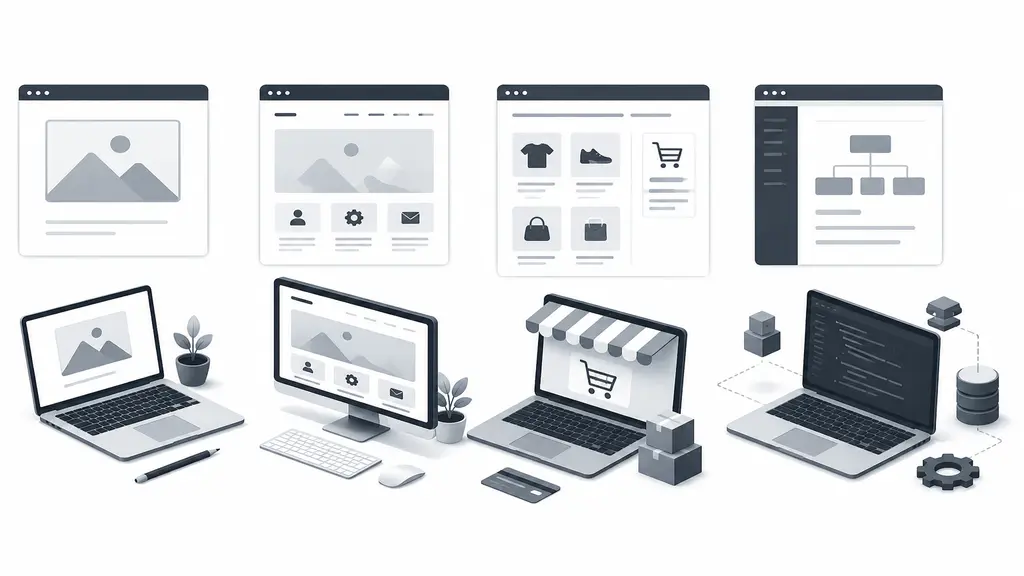
What Different Types of Websites Cost
Forget one flat number. What matters is which of these your project actually looks like.
- A simple portfolio or landing page: enough for a freelancer, a tutor, a tiny shop that just needs to exist online somewhere. Cheapest option by a wide margin.
- A standard business site: home, about, services, contact — five to ten pages, give or take. Most small businesses stop right here and never need more.
- An e-commerce store: product pages, a cart, payment processing, and sometimes inventory syncing on top of that. More parts working together means the price climbs.
- A custom web application: an internal tool, a member portal, something running on real logic behind the scenes. This is where both time and money stretch the furthest.
Even with all that, none of it means much on its own. The real number only comes together once someone actually sits with you and prices your project specifically. Not a category off a list.
How Much Does a Website Cost Per Month?
Building it is just step one. What actually trips people up is what keeps costing money after the site goes live.
- Hosting — a server your site actually lives on, billed monthly or yearly depending on traffic and storage.
- Domain renewal. You’re renting the name year to year, whether you think of it that way or not. Miss a renewal, lose the name.
- SSL certificate keeps the site on HTTPS instead of scaring people off with a warning page. Bundled free sometimes, charged separately other times.
- Maintenance: updates, patches, the occasional small text fix. Plenty of owners pay a small fee just to never think about this.
- Business email, if you want hello@yourdomain.com instead of a Gmail address. Usually its own separate cost.
Add it together and it’s pretty clear — a website isn’t a one-time purchase. It’s closer to paying rent. Small, ongoing, and it doesn’t stop just because the site’s finished.
What Drives the Price Up or Down
Five things tend to decide where a quote lands, more than anything else.
- Design complexity. Grabbing a theme and changing the colors takes an afternoon. Building every section from scratch takes real hours from a real person, and that time is what you’re paying for.
- Page count. Five pages for a corner shop and fifty pages for a growing company aren’t the same job, obviously.
- Functionality. Booking calendars, logins, dashboards — none of it is a minor extra. Each piece is its own separate build with its own testing.
- Platform choice. WordPress, Shopify, hand-coded from scratch. Three completely different pricing logics, three completely different maintenance paths.
- Content and visuals. Real copywriting and actual photography instead of stock images almost always shows up as its own line item.
How to Build a Website for Free (And What Still Costs Money)
Technically, yes, you can build one for nothing. WordPress.com, Wix’s free tier, Google Sites — all of them get something live without spending a cent. There’s a catch though. Your address ends up looking like yourname.wixsite.com instead of your actual name, ads you didn’t pick show up on the page, and the design toolkit shrinks compared to what a paid plan gives you.
The moment you want it to actually look like a business — your own domain, nothing from the builder plastered on it, room to grow — there’s usually a small cost hiding somewhere. Small really does mean small here, though. A domain by itself runs about $10 to $20 a year depending on what extension you go with. That’s often the entire gap between something that looks like a weekend hobby project and something you’d hand out on a business card.
What You’d Actually Pay: Real Numbers
Quick rundown, cheapest option first.
- Domain name — as little as $1 to $3 the first year, then renews around $14 to $20.
- Basic hosting — roughly $3 a month to start, so call it $30 to $36 a year for something simple.
- Portfolio or one-page site — figure $300 to $500 on the low end.
- Standard business website — usually opens around $1,000, up to about $1,500.
- E-commerce store — $3,000 to $5,000 is the realistic starting range.
- Custom web app — $8,000 to $10,000 minimum, and it climbs from there fast.
So the actual floor, just to have any website live at all, sits close to $30 a year. Domain plus basic hosting, nothing more. Everything after that is paying for whatever’s actually on the site.
Example: What Goes Into a Real Build
Take a standard business site as an example. You’re covering a domain, hosting, a set of pages designed around your actual brand instead of a stock template, a working contact form, and enough basic SEO that Google doesn’t just skip over you. Put together, most clients end up somewhere between $1,050 and $1,550 for that first year. After that it drops to roughly $25 to $35 a year, just keeping the domain and hosting active. We checked these numbers against what the team at Clipping Path India is actually charging for this kind of build right now, so it’s not a guess pulled out of nowhere.
Conclusion
How much does a website cost, in the end? Nobody can give you a real answer without knowing what you’re actually trying to build first. A quote that lands instantly, no questions asked, is a template price. Not one built for you. What you end up paying comes down to what the site has to do, how it’s built, and what you’re fine spending month to month once it’s live. Get clear on your own needs before anything else. Then find a team that actually asks about your project instead of just reading off a package menu. Whenever you’re ready, reach out to Arafin Media, and we’ll work out something that actually fits what you’re building.