Content creator is a term used everywhere now, on job listings, in casual conversation, on every social media bio. But a lot of people using it cannot really explain what is a content creator when asked directly. It is not one fixed job. A content creator makes videos, photos, blog posts, podcasts, or graphics for people to watch, read, or listen to online. The reason can be entertainment, education, or a mix of the two. This guide explains what is a content creator, the main types, what the work actually involves day to day, the skills that matter, and how people earn from it. Arafin Media wrote this because clients ask about this often. Business owners mostly, trying to figure out whether working with a content creator is worth the investment for their brand.
What Is a Content Creator?
A content creator makes original content and shares it publicly — video, photos, articles, podcasts, graphic work, doesn’t matter which. Some care mostly about entertaining people. Others want to teach something or pass along knowledge. Plenty just do a bit of both and never bother sorting it out. What doesn’t change, whatever the format, is this: someone out there is giving up their time for something this person made. They chose to. That’s basically the whole thing.
No test involved. No license. A person uploading to YouTube every week counts. So does someone running a small blog that maybe a few thousand people follow quietly. An Instagram page slowly pulling in a real audience through reels counts just as much.
Types of Content Creators
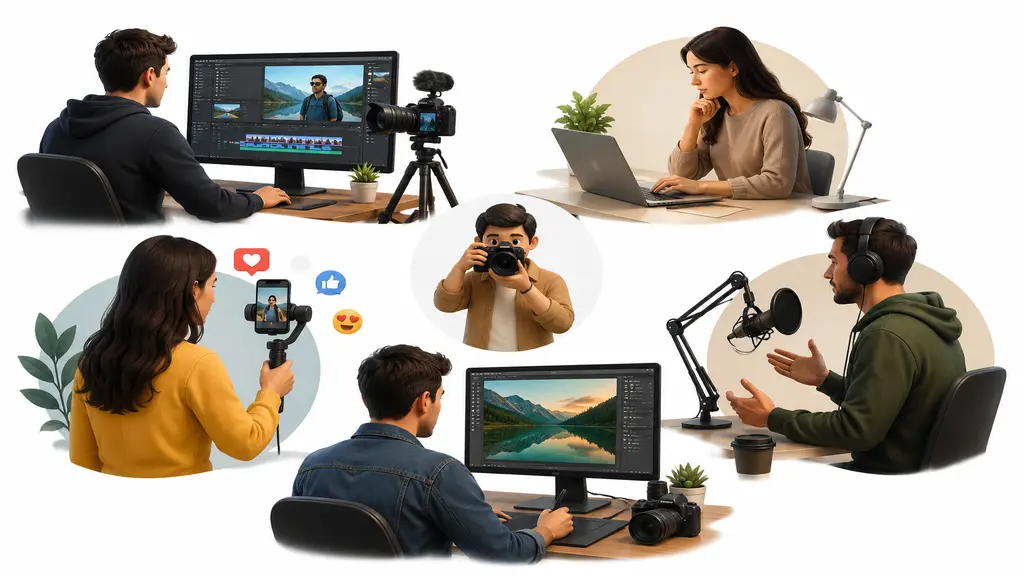
Not everyone in this space does the same kind of work. Most creators land on one main format eventually, sometimes because they picked it, sometimes because it just happened to stick —
- Video creators: put out vlogs, reviews, and tutorials, mostly on YouTube, TikTok, or Facebook.
- Bloggers: write for a website, usually sticking to one niche long enough to build real authority in it.
- Social media influencers: post reels, stories, and updates on Instagram, Facebook, or Twitter — often enough to keep an audience growing.
- Podcasters: skip video entirely, running interviews or ongoing talks around a theme, audio only.
- Photographers and designers: tell their story visually instead of through words.
What Does a Content Creator Do?
A lot of people picture this job as just pointing a camera and hitting upload. That’s really not the case. Most of the actual effort happens before anything is even posted —
- Idea generation: usually starting from research into what people are already searching for or stuck on.
- The actual creation: filming, editing, writing, or designing. This is where most of the hours go.
- SEO work: picking keywords that help the content get discovered when someone actually searches.
- Publishing and promotion: timing it right, choosing the right platform, then giving it a push.
- Staying in touch with the audience: comments, messages, keeping things alive instead of just broadcasting into the void.
Content Creator Skills You Need
There’s no degree for this. But a few things tend to separate people who quit within a couple months from the ones who actually build something —
- Creativity: fresh ideas travel further than recycled ones, almost always.
- Communication: talking with an audience, not just at them, which sounds obvious but trips up a lot of people.
- Technical skill: editing, photography, design, or plain writing, depending on the format.
- SEO and marketing knowledge: great content that nobody finds doesn’t really go anywhere.
- Patience: growth is slow early on, and creators who give up after a few months rarely get far enough to see it pay off.

How Do Content Creators Make Money?
Comes up constantly, this question. Most creators don’t rely on one single income source — usually it’s two or three stacked on top of each other —
- Sponsorships and brand deals: a company pays to get featured in someone’s content.
- Affiliate marketing: earning a cut whenever someone buys through a shared link.
- Ad revenue: the standard setup on YouTube and most blogs.
- Selling their own products: e-books, courses, templates, that kind of thing.
- Direct support from fans: through Patreon or YouTube memberships.
Where Do Content Creators Work?
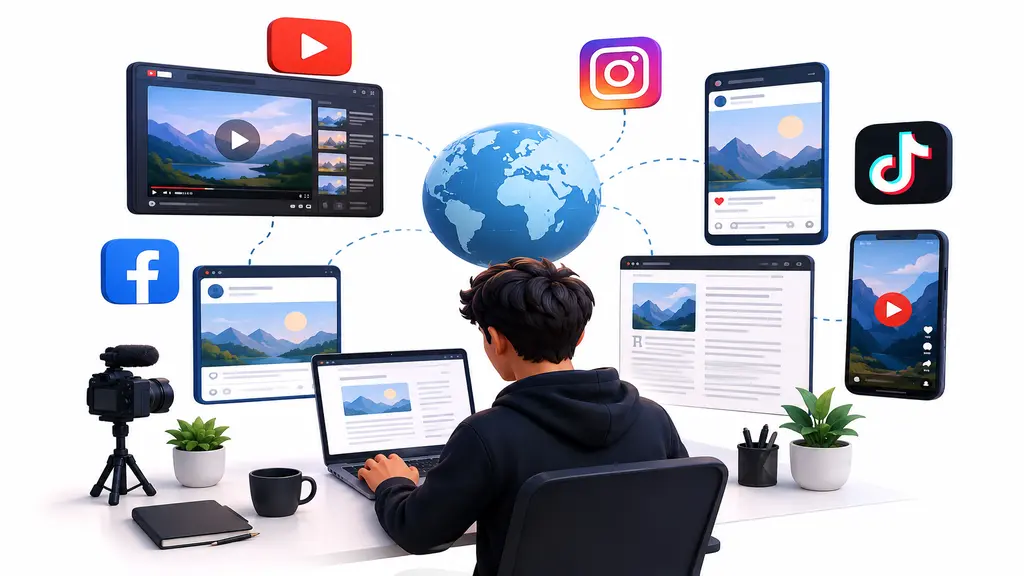
Hardly anyone sticks to just one platform. Once something starts working, most creators end up spreading out to others fairly fast —
- YouTube: still the default for video, still the biggest name in the space by far.
- Instagram and Facebook: work well for photos, reels, and shorter clips.
- A personal website or blog: builds something more lasting than social platforms usually allow — an audience that’s actually yours, not borrowed from an algorithm.
- TikTok: rewards short, fast, attention-grabbing content better than almost anywhere else right now.
This kind of work — writing SEO-friendly blog content for client websites — makes up a good chunk of what Arafin Media handles regularly. Worth a look at the blog pages for Grameen Solar, Clipping Creations India, and AutoCAD India if you want real examples.
Why Content Creation Matters
Businesses eventually figure out something creators already know without thinking about it. Content builds trust first, and sales rarely happen before that trust is there. A creator who sticks around consistently for a brand slowly turns into its voice, whether or not that was ever the plan. Sometimes that creator becomes a customer’s very first touchpoint with the company, before the website even gets a visit. And it’s not only about business either. Plenty of people started making content with no real plan, just messing around, and somewhere along the way it became their main income. Along with the money, something else came too — something that doesn’t really show up on a spreadsheet, but matters anyway.
Conclusion
So what is a content creator, when it comes down to it? Someone who takes an idea and turns it into something people actually want to watch, read, or listen to — then keeps showing up long enough for a real audience to grow around that work. Takes creativity, a bit of strategy, and a good amount of patience to get there. For a business that wants content people genuinely respond to, or a brand chasing a consistent voice online, this is exactly the kind of work Arafin Media handles.