
A marketing plan is the foundation of your business activities and helps you reach your target audience. A business grows through unique marketing, and better marketing can help it succeed. Marketing helps your business reach its goals; strong marketing can save you from making costly mistakes. A business can fail because of marketing mistakes. So, take your marketing plan seriously to take your business to the next level.
In this marketing plan, we will show you a different path to write a better marketing plan, and you will be able to make a proper marketing plan by following these guides.
What Is a Marketing Plan?
Marketing is a process aimed at reaching people with your product or service. It is how you will attract customers to your product and make it possible for them to buy it. A marketing plan can cover different time periods, such as one month, six months, or twelve months. When you create a marketing plan, it needs a duration to analyze your marketing return.
Marketing plans aim to reach their target audience within a set timeframe. If the marketing strategy meets the expected target, it’s a good marketing plan. A marketing plan can differ depending on your product or service. So, you need to learn the core fundamentals of marketing.
Why Do You Need a Marketing Plan?
A marketing plan is essential for every business. Without a marketing plan, a business lacks the right tools to succeed in the market. Marketing plays a vital role in building a market presence and a customer database because without knowing your customers, you can’t do business in the market. So, you definitely need a marketing plan.
A marketing plan is the first step to move your business forward. To capture market share for your product or service, you need a well-polished strategy because big companies are already meeting customer needs. So, entering an existing market without a marketing plan is a major mistake for your business. Now you understand why you need a marketing plan to establish your business.
How to Make a Marketing Plan
Make a perfect plan by following these steps:

1. Start With a SWOT Analysis
SWOT means strengths, weaknesses, opportunities, and threats. So, identify your business’s strengths, weaknesses, opportunities, and threats.
- Strengths are what make you stronger than anyone else in the market for your target audience; these can include skills, capabilities, and proficiencies that competitors can’t easily copy.
- A weakness is an obstacle to achieving your goal, such as a service you offer that depends on others.
- Opportunities are chances to expand your business or increase profitability. You have to stay updated on your industry, market, and new trends that are performing in the market
- Threats are factors that affect your business, like customer reviews, employee shortages, political obstacles, etc.
2. Get to Know Your Customers
Make a customer database based on their needs. Which services of your business are they liking and which are they not? Try to get feedback or reviews from them. Maintain good relationships with your existing customers to keep them loyal to your product or service. When you have several customer types, it helps you meet their needs.
3. Set Clear Marketing Goals
Create a clear marketing concept that helps you reach your target audience. A clear marketing objective will support what you want to achieve with your marketing. When you define a precise marketing concept, your target customer will be narrower, which will help you filter customers for your business.
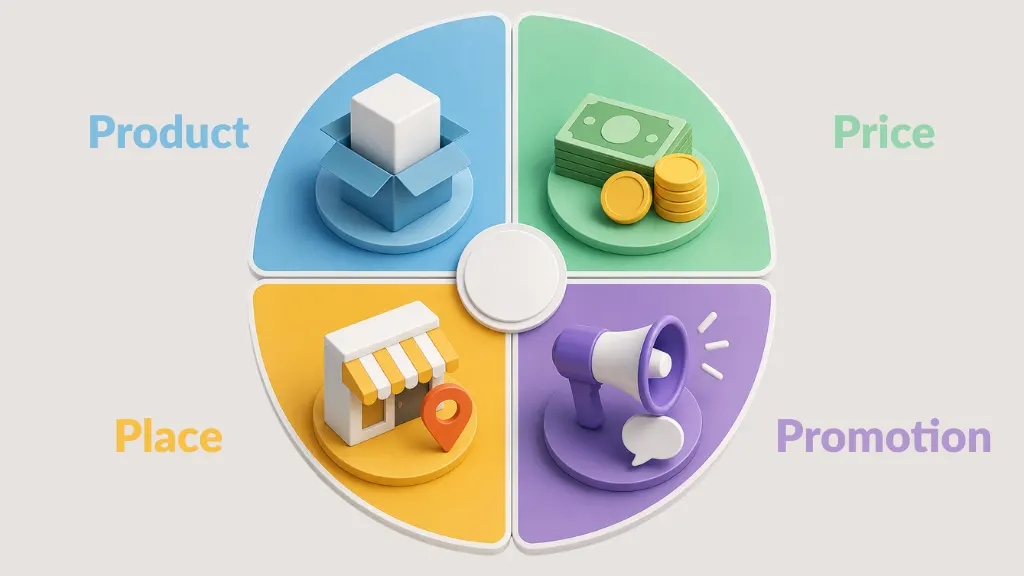
4. Plan Your Marketing Around the “Four Ps”
Once you’ve done that, you know your business goal and your customer. Now it’s time to use a marketing strategy to polish the plan and get better results. You can use the marketing terms “four Ps.”
- Product: What product or service will meet the customer’s needs, and can you give better than the existing company has in the marketplace?
- Pricing: What price range will you use? Will you offer a lower price than the competitor, or will you match the price and offer better quality? Pricing is based on how much you are spending on making, marketing, and selling, and also on the profit margin you want to achieve.
- Place: Place plays a crucial role in the sale. When you want to sell your product or service, keep in mind that customers like to search for or buy it in a specific place. Select a place where customers are searching for similar products or services. It can be offline or online; it doesn’t matter, as long as customers are already searching for or buying from that place.
- Promotion: Promotion is how you reach, attract, and sell to your customers. There are several ways to promote your business, like advertising, social media marketing, email marketing, search engine marketing, and other promotional activities.
5. Set a Realistic Marketing Budget
When you plan your marketing, you need a budget. So, you need to analyze the process to estimate the cost. The hardest part of marketing is setting a budget properly.
When you create a marketing plan to make your business successful, you need to identify which methods your competitors use and measure how much those channels will cost. This way, you research your market and create a strong marketing budget, which helps you achieve the best results.
Conclusion
Marketing is a very important part of a business. When you start a business, you need a marketing plan. Without marketing, the customer will not know about your business. So, when you’re writing your marketing plan, follow these guides to increase your chances of success, since most business advisors support these methods.
Albert Humphrey developed the SWOT marketing strategy, and E. Jerome McCarthy developed the “Four Ps.” We discussed their theories to help a business succeed. I hope it helps you achieve your business goal.