If you’re interested in online marketing, you’ve probably asked yourself, should I learn SEO or digital marketing?
It’s a common question because both skills offer exciting career opportunities, freelance potential, and business growth benefits. However, many beginners struggle to understand the difference between SEO and digital marketing.
The good news is that neither choice is wrong. However, your goals, interests, and career plans should influence your decision.
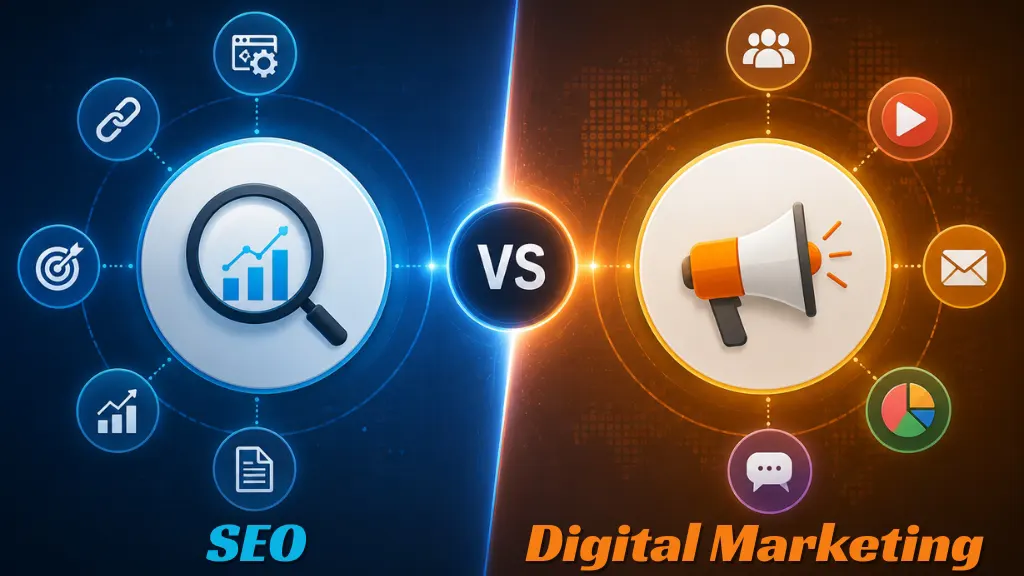
SEO focuses primarily on improving website visibility in search engines, while digital marketing covers a much broader range of strategies, including SEO, social media, paid advertising, content marketing, email marketing, and more.
Therefore, understanding the strengths and limitations of each path can help you make a smarter decision.
In this guide, we’ll compare both disciplines, explore career opportunities, discuss earning potential, and help you determine which skill deserves your focus.
Understanding SEO and Digital Marketing
Before deciding which skill to learn, it’s important to understand how they differ.
What Is SEO?
SEO stands for Search Engine Optimization.
SEO helps websites rank higher in search engines like Google.
The primary goal is to increase organic traffic by improving:
- Website structure
- Content quality
- Keyword optimization
- Technical performance
- Backlink profiles
- User experience
SEO professionals help businesses attract visitors without relying solely on paid advertising.
What Is Digital Marketing?
Digital marketing is a broader field.
It includes multiple marketing channels such as:
- Search Engine Optimization
- Social Media Marketing
- Pay-Per-Click Advertising (PPC)
- Content Marketing
- Email Marketing
- Video Marketing
- Influencer Marketing
- Conversion Optimization
As a result, digital marketers often manage multiple strategies simultaneously.
Should I Learn SEO or Digital Marketing for Career Growth?
Many beginners ask, should I learn SEO or digital marketing because they want strong career opportunities.
The answer depends on your long-term goals.
Choose SEO If You Prefer:
- Data analysis
- Website optimization
- Search engine algorithms
- Technical problem-solving
- Long-term growth strategies
SEO specialists often enjoy working with analytics, rankings, and website performance improvements.
Choose Digital Marketing If You Prefer:
- Variety in daily tasks
- Advertising campaigns
- Social media management
- Content creation
- Marketing strategy
Digital marketers usually work across multiple channels rather than specializing in one area.
Therefore, personality and interests play a major role in choosing the right path.
Why SEO Remains One of the Most Valuable Skills
Search engines remain one of the largest sources of online traffic.
Every day, people search for:
- Products
- Services
- Information
- Solutions
Businesses want visibility for these searches.
Consequently, SEO professionals continue to stay in high demand.
Benefits of Learning SEO
Long-Term Value: SEO generates traffic for months or even years after optimization.
High Demand: Businesses constantly seek experts who can improve rankings.
Freelance Opportunities: Many SEO professionals build successful freelance careers.
Business Growth: SEO knowledge helps entrepreneurs grow their own websites.
Because search traffic drives revenue, SEO remains one of the most profitable digital skills.
Why Digital Marketing Offers Broader Opportunities
Digital marketing covers far more than search engines.
As a result, professionals gain experience across multiple channels.
Benefits of Learning Digital Marketing
Multiple Career Paths: You can specialize in
- Social media
- PPC advertising
- Content marketing
- Email marketing
- Analytics
Greater Flexibility: Digital marketers often work with different industries and campaigns.
Management Opportunities: Marketing managers typically oversee multiple marketing channels.
Better Strategic Understanding: Broad knowledge helps professionals understand the complete customer journey.
Therefore, digital marketing offers wider exposure to modern marketing practices.
Should I Learn SEO or Digital Marketing as a Beginner?
For complete beginners, the decision often feels overwhelming.
Fortunately, there’s a practical approach.
Start With SEO If:
- You enjoy research
- You like analytics
- You prefer structured learning
- You want a specialized skill
SEO teaches valuable fundamentals including:
- Keywords
- Search intent
- Content optimization
- Website performance
These concepts support many other marketing disciplines.
Start With Digital Marketing If:
- You want broader knowledge
- You enjoy creative work
- You want multiple career options
- You plan to manage campaigns
Digital marketing provides a larger overview of online business growth.
Career Opportunities: SEO vs Digital Marketing
Both fields offer strong employment prospects.
However, career paths differ slightly.
SEO Career Paths
Popular SEO roles include:
- SEO Specialist
- Technical SEO Expert
- SEO Consultant
- SEO Manager
- SEO Analyst
- Content SEO Strategist
SEO professionals often focus deeply on search performance.
Digital Marketing Career Paths
Digital marketing roles include:
- Digital Marketing Specialist
- Social Media Manager
- PPC Specialist
- Content Marketing Manager
- Email Marketing Specialist
- Digital Marketing Manager
Because digital marketing covers more areas, career options tend to be broader.
Which Skill Is Better for Freelancing?
Freelancing continues growing worldwide.
Both skills work well for independent professionals.
SEO Freelancing Advantages
- Recurring monthly contracts
- Long-term client relationships
- Predictable service offerings
Digital Marketing Freelancing Advantages
- More service variety
- Broader client demand
- Multiple revenue streams
Many successful freelancers eventually offer both services.
A Smart Learning Path for Beginners
Instead of viewing this as an either-or decision, consider a progressive learning approach.
1: Learn SEO Fundamentals:
Focus on
- Keywords
- Search intent
- On-page optimization
- Technical basics
- Content strategy
2: Learn Content Marketing: Content supports both SEO and broader marketing efforts.
3: Explore Paid Advertising: Understand Google Ads and social media advertising.
4: Learn Social Media Marketing: Build audience engagement and brand awareness.
5: Study Analytics: Data interpretation improves decision-making.
This approach creates a strong foundation while gradually expanding your expertise.
Common Mistakes When Learning Marketing Skills
Many beginners slow their progress by making avoidable mistakes.
Trying to Learn Everything at Once: Focus on one area before expanding.
Ignoring Practical Experience: Theory alone isn’t enough.
Avoiding Analytics: Data drives marketing decisions.
Chasing Shortcuts: Sustainable skills require consistent learning and practice.
Success comes from application rather than information consumption alone.
Conclusion
If you’re wondering should I learn SEO or digital marketing, the answer depends on your goals.
Choose SEO if you prefer specialization, analytics, and search engine growth strategies.
Choose digital marketing if you want broader knowledge across multiple channels.
However, the smartest approach may be learning SEO first and then expanding into digital marketing.
SEO teaches foundational skills that support content marketing, advertising, website optimization, and audience growth.
Ultimately, both skills offer excellent career opportunities, strong earning potential, and valuable business benefits.
The most successful professionals rarely choose one forever. Instead, they build expertise gradually and continue learning as the digital landscape evolves.