A couple of years ago, I was working on a website receiving quite some traffic. Our budgets were going to Facebook ads, blog posts and even Google visitors. On paper, everything looked good. The issue was that very few people were interested in buying. We kept thinking that the answer was always going to be “more traffic.” We raised the budget of the ads. Traffic went up. Sales barely moved. At over all of that was when I really started to get an idea of what CRO in marketing even is. It wasn’t a traffic problem. It was a conversion problem.
As we improved the product page gradually having a new and simple checkout, we changed the call to action button and removed some form fields that added nothing creative, without increasing traffic, conversions started going up. That’s the power of CRO.
If you had been hearing phrases like conversion rates, landing pages, A/B testing or optimization from the marketers, this guide will help you understand what actually is CRO and why do the businesses care about it so much.
What Is CRO in Marketing?
CRO stands for Conversion Rate Optimization. In simple terms, CRO is the process of increasing the percentage of people who take a desired action on your website, landing page, or marketing campaign.
That action could be:
- Buying a product
- Filling out a contact form
- Signing up for a newsletter
- Booking an appointment
- Downloading a guide
- Starting a free trial
- Requesting a quote
Imagine 1,000 people visit your website and 20 of them buy something. Your conversion rate is 2%. If you improve the website and 40 people buy instead, the conversion rate becomes 4%. You generated twice as many sales from the same amount of traffic. That is CRO.
Why CRO Matters More Than Most Businesses Think
One thing I see all the time is businesses focusing only on getting more visitors. More Facebook ads. More Google ads. More SEO. More social media posts. Traffic is important, but traffic alone does not guarantee revenue. CRO helps you make better use of the traffic you already have.
For example:
Monthly Visitors | Conversion Rate | Sales |
10,000 | 1% | 100 |
10,000 | 2% | 200 |
10,000 | 3% | 300 |
Notice something? The traffic stayed exactly the same. Only the conversion rate changed. That’s why many experienced marketers work on optimization before increasing advertising budgets.

What Counts as a Conversion?
A conversion is any action that moves a visitor closer to becoming a customer. Depending on the business, that could mean different things.
For an online store:
- Add to cart
- Purchase
- Checkout completion
For a service business:
- Contact form submission
- Phone call
- Appointment booking
For a blog:
- Newsletter signup
- Downloading a free ebook
- Clicking an affiliate link
CRO is about improving whichever action matters most for your business goals.
The Formula Behind CRO
The conversion rate formula is simple:
Conversion Rate = (Conversions ÷ Visitors) × 100
For example:
- 5,000 visitors
- 150 purchases
150 ÷ 5,000 = 0.03
0.03 × 100 = 3% conversion rate
This number helps marketers measure whether website changes are actually improving performance.
How CRO Actually Works
When people hear “optimization,” they often imagine complicated software or advanced coding. In reality, CRO usually starts with observing user behavior.
I usually ask questions like:
- Where are visitors leaving the page?
- Which button gets clicked the most?
- Which form field causes people to quit?
- How long does checkout take?
- Are important messages visible immediately?
- Does the page load quickly on mobile?
Small improvements often produce surprisingly large results.
Common CRO Techniques
Here are some of the changes I’ve seen increase conversions repeatedly.
Improve the Call-to-Action (CTA)
A button that says “Get Started” may perform differently from “Start My Free Trial.”
Clearer language usually wins.
Reduce Form Fields
If a contact form asks for:
- Name
- Phone
- Company
- Job title
- Website
- Budget
- Address
Many people leave.
Asking only for name and email often increases submissions dramatically.
Make Pages Faster
A slow website kills conversions. Even a one- or two-second delay can reduce purchases and lead generation.
Improve Mobile Experience
A page that looks great on desktop but awkward on mobile will lose a large percentage of visitors. Today, mobile optimization is not optional.
Add Social Proof
People trust other people. Reviews, testimonials, customer photos, case studies, and ratings help reduce hesitation.

A/B Testing: The Core of CRO
One of the most important CRO methods is A/B testing. This means creating two versions of a page and comparing which one performs better.
For example:
Version A:
- Green button
- “Buy Now”
Version B:
- Blue button
- “Get Yours Today”
Half of visitors see Version A. Half see Version B. Whichever version generates more conversions becomes the winner. Good CRO decisions are based on data, not guesses.
The CRO Mistake I Made Early On
Early in my career, I redesigned an entire landing page because I thought it looked outdated. The new design was cleaner, more modern, and honestly much prettier. Conversions dropped. That experience taught me something important: A beautiful page is not always a high-converting page. CRO is about performance, not personal taste. The best-looking design is not always the design that generates the most sales.
CRO and SEO Work Together
People often treat SEO and CRO as separate things. In reality, they work extremely well together. SEO brings visitors. CRO turns visitors into customers. Imagine ranking on Google for an important keyword and receiving thousands of visitors every month. Without CRO, many of those visitors may leave without taking any action. With strong CRO, the same traffic can produce significantly more leads and revenue.
I usually think of it like this:
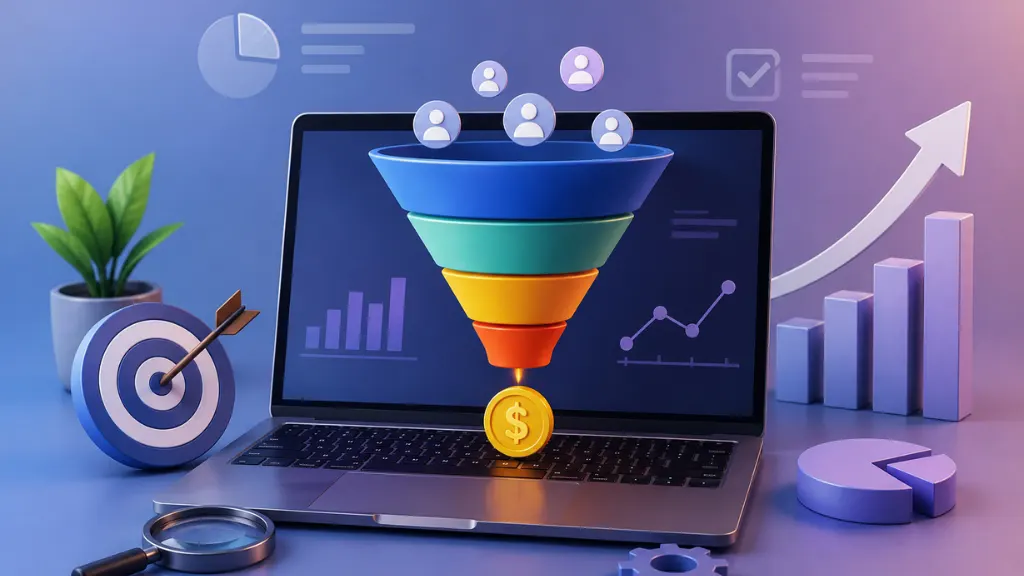
- SEO fills the funnel
- CRO improves the funnel
You generally want both.
Tools Commonly Used for CRO
Depending on the project, marketers often use tools such as:
- Google Analytics
- Microsoft Clarity
- Hotjar
- VWO
- Optimizely
- Google Optimize alternatives
- A/B testing platforms
- Heatmap software
Heatmaps are particularly useful because they show where people click, scroll, and stop paying attention. Sometimes a button is simply too far down the page.
CRO Examples in Different Businesses
eCommerce Store
Changes:
- Larger product images
- Better reviews
- Faster checkout
- Guest checkout option
Result:
More purchases from existing traffic.
Local Service Business
Changes:
- Click-to-call button
- Shorter contact form
- Clear pricing
- Trust badges
Result:
More inquiries and appointments.
SaaS Company
Changes:
- Simpler homepage
- Free trial above the fold
- Clear value proposition
- Strong testimonials
Result:
More trial signups.
Different businesses optimize different conversions, but the principle is the same.
The Biggest CRO Mistake Businesses Make
The biggest mistake is optimizing without data.
People often say:
“I think the red button looks better.”
“I feel this layout is cleaner.”
“My manager prefers this headline.”
CRO should be driven by:
- Analytics
- Heatmaps
- User recordings
- Surveys
- A/B tests
- Conversion tracking
Opinion is useful.
Evidence is better.
Conclusion
If I had to describe the process of asking what is CRO in marketing, it would be this sentence: More results with the traffic you have — this is what is CRO. Less expensive than driving additional traffic, less strenuous than rolling out a new marketing campaign and even more effective than most businesses anticipate.
The lesson that shifted my marketing mindset is simple: never assume you need more visitors. At times, you just need a website that converts visitors more easily into customers. That is actually called CRO.