Digital marketing focuses on attracting, engaging, and converting potential customers. However, not every visitor becomes a customer immediately. People usually move through several stages before making a purchase decision. This process is known as a marketing funnel.
If you’ve been wondering what are funnels in digital marketing, you’re not alone. Marketing funnels help businesses understand how customers interact with their brand from the first touchpoint to the final conversion.
Moreover, funnels allow marketers to identify opportunities, improve customer experiences, and increase sales. Without a clear funnel strategy, businesses often struggle to convert website visitors into paying customers.
In this guide, you’ll learn how marketing funnels work, why they matter, and how businesses use them to drive consistent growth.
What Are Funnels in Digital Marketing?
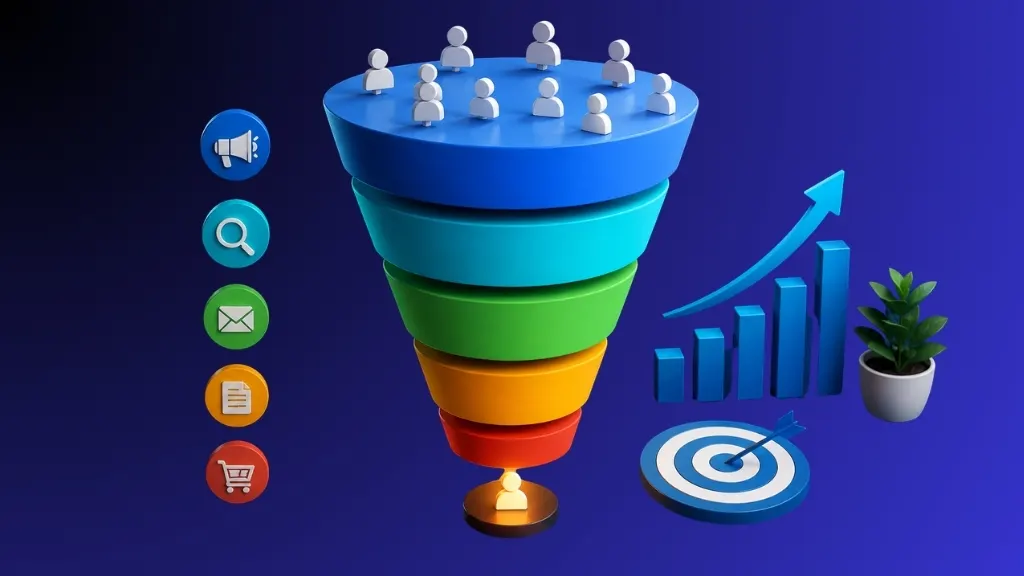
A marketing funnel is a visual representation of the customer journey. It shows the steps people take before becoming customers.
The funnel starts wide because many people enter at the top. However, only a portion move through each stage and eventually convert.
Typically, a funnel includes:
- Awareness
- Interest
- Consideration
- Conversion
- Retention
The funnel shape reflects how audiences narrow as they progress through the buying process.
Therefore, marketers use funnels to understand customer behavior and optimize every stage of the journey.
Why Marketing Funnels Matter
Marketing funnels help businesses understand how prospects move toward a purchase decision. Without a funnel, companies may attract traffic but fail to generate conversions.
A well-structured funnel helps businesses:
- Identify customer needs
- Improve marketing performance
- Increase conversions
- Reduce customer acquisition costs
- Improve customer retention
As a result, businesses gain greater control over their marketing efforts.
The Main Stages of a Digital Marketing Funnel
Although funnel structures vary slightly, most follow similar stages.
1. Awareness Stage
This is the top of the funnel.
At this point, potential customers discover your business for the first time.
Common awareness channels include:
- Search engines
- Social media
- Blog content
- YouTube videos
- Online advertising
The goal here is not immediate sales.
Instead, businesses focus on introducing their brand and building visibility.
For example, someone searching for “best digital marketing tips” may find your blog article and learn about your company.
2. Interest Stage
After discovering your brand, some visitors develop interest.
They want more information before making any decisions.
Businesses nurture interest through:
- Educational blog posts
- Email newsletters
- Social media content
- Webinars
- Case studies
At this stage, trust becomes increasingly important.
Therefore, businesses should provide valuable content that answers questions and solves problems.
3. Consideration Stage
Now prospects actively evaluate solutions.
They compare options, research competitors, and assess potential benefits.
Content that works well here includes:
- Product demonstrations
- Customer testimonials
- Comparison guides
- Free consultations
- Detailed service pages
Because prospects are closer to purchasing, businesses should focus on demonstrating expertise and credibility.
4. Conversion Stage
The conversion stage occurs when a prospect takes the desired action.
Conversions may include:
- Purchasing a product
- Booking a consultation
- Requesting a quote
- Signing up for a service
- Completing a lead form
At this point, businesses should remove obstacles and simplify the decision-making process.
Clear calls to action often improve conversion rates significantly.
5. Retention Stage
Many marketers focus only on acquiring customers.
However, retaining customers often proves more profitable.
Retention strategies include:
- Email follow-ups
- Loyalty programs
- Customer support
- Exclusive offers
- Personalized communication
Because satisfied customers frequently return and recommend businesses, retention deserves ongoing attention.
Types of Marketing Funnels
Different businesses use different funnel models.
Lead Generation Funnel
Designed to collect leads before direct sales conversations.
Common elements include:
- Landing pages
- Lead magnets
- Email sequences
Sales Funnel
Focuses on guiding prospects toward purchases.
Often used by:
- E-commerce stores
- Service providers
- Software companies
Webinar Funnel
Uses educational presentations to generate leads and conversions.
Product Launch Funnel
Builds anticipation before launching products or services. Each funnel serves a specific purpose while following similar customer journey principles.
How Businesses Build Effective Funnels
Successful funnels require planning and optimization.
Understand Your Audience: Research customer needs, challenges, and goals.
Create Valuable Content: Content should match each stage of the funnel.
Capture Leads: Offer valuable resources in exchange for contact information.
Nurture Relationships: Continue providing helpful information through email and content marketing.
Optimize Conversion Pages: Landing pages should remain simple, persuasive, and user-friendly.
Because every audience behaves differently, continuous testing helps improve performance.
Common Funnel Marketing Channels
Marketing funnels often combine multiple channels.
Search Engine Optimization (SEO): SEO attracts prospects during the awareness stage.
Content Marketing: Educational content builds trust and authority.
Social Media Marketing: Social platforms help increase visibility and engagement.
Email Marketing: Email nurtures leads and supports customer retention.
Paid Advertising: Advertising accelerates traffic generation and lead acquisition. Combining channels creates a stronger and more effective funnel.
How Funnels Improve Conversion Rates: Funnels help marketers identify weaknesses in the customer journey.
For example:
- High traffic but few leads may indicate weak lead magnets.
- Strong lead generation but low sales may suggest poor nurturing.
- Good sales but low retention may signal customer experience issues.
Therefore, funnels provide valuable insights for improvement.
Businesses that optimize their funnels often achieve higher conversion rates and stronger returns on investment.
Tools Used to Manage Marketing Funnels
Several tools support funnel creation and optimization.
Popular options include:
- Google Analytics
- HubSpot
- ClickFunnels
- ActiveCampaign
- Mailchimp
- SEMrush
- Google Search Console
These tools help marketers track user behavior, automate communication, and improve conversion performance.
Final Thoughts
Understanding what are funnels in digital marketing is essential for businesses that want consistent growth.
Marketing funnels help guide prospects from initial awareness to conversion and beyond. Furthermore, they provide valuable insights into customer behavior and campaign performance.
Rather than focusing only on traffic or sales, funnels allow marketers to optimize the entire customer journey.
Whether you’re a small business owner, marketer, or entrepreneur, building an effective funnel can improve lead generation, increase conversions, and strengthen customer relationships.
As digital marketing continues evolving, well-optimized funnels will remain one of the most important tools for sustainable business growth.
FAQ's
A marketing funnel is a model that shows how people move from discovering a business to becoming customers.
Funnels help businesses understand customer behavior, improve conversions, and optimize marketing performance.
Most funnels include awareness, interest, consideration, conversion, and retention stages.
Yes. Marketing funnels help businesses attract, nurture, and convert potential customers more effectively.
SEO, content marketing, email marketing, social media marketing, and paid advertising commonly support funnel strategies.