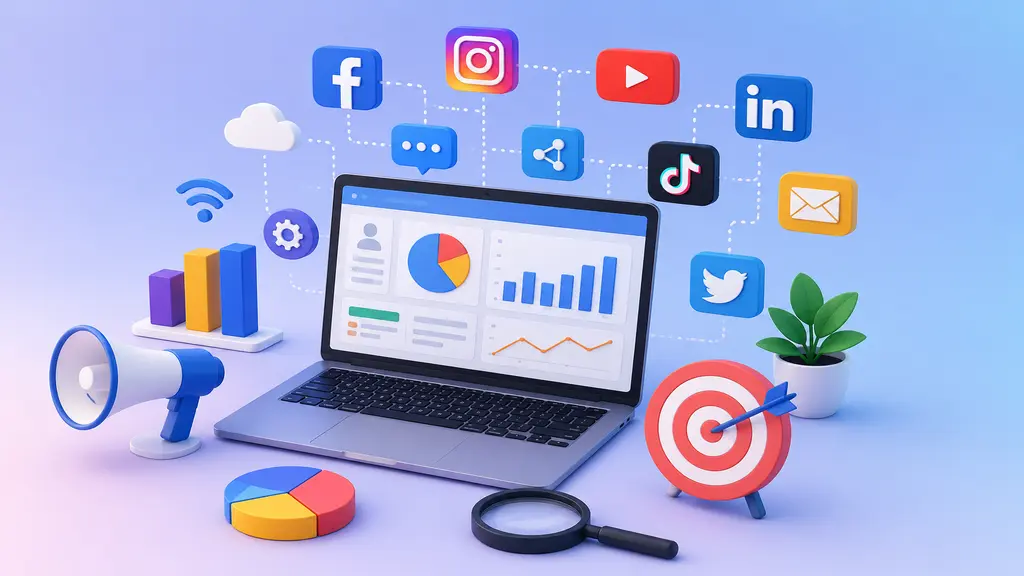
What are digital marketing platforms? This is a common question that business owners ask when they begin looking into growing their business online. To put it simply, digital marketing platforms are tools that help you promote your business on the internet. They include things like social media, email, and search engines. Every business, whether big or small, now uses at least one of these platforms because people spend most of their time online these days. A few years ago, businesses mainly used newspapers, banners, and TV ads. But now, that’s changed completely. In fact, a single smartphone now has more marketing power than an entire billboard campaign once did. This change didn’t just happen by chance. It happened because digital marketing platforms made advertising more intelligent, quicker, and much cheaper. As a result, even a small local business can now compete with larger brands online. In this guide, we will explain what digital marketing platforms are. Along the way, we will also cover the main types, why they are important, and how to choose the right one. By the end, you will have a clear and practical understanding of this topic, and the confidence to start using these tools yourself.
What Are Digital Marketing Platforms, Exactly?
Digital marketing platforms are software tools or online systems that allow businesses to reach customers through digital channels. These channels include search engines, social media, email, and websites. Unlike traditional advertising, these platforms do much more than show ads. For example, many of them also help create content, track customers, and provide real-time data on how well campaigns are performing. In short, a digital marketing platform is any tool that helps with your online marketing. This process usually starts when a customer clicks on something and ends when they complete a purchase or sign up. Think about this: a traditional billboard shows the same message to every driver who passes by.
On the other hand, a digital marketing platform can show different messages to different people based on what they like. This level of personalization gives these platforms their power. Because of this, businesses no longer have to guess what their audience wants. Instead, they can use real data to make smarter decisions each day.

Why Digital Marketing Platforms Matter Today
Digital tools are no longer optional; they are now a core part of doing business. So, here is why they matter so much right now.
- Wider audience reach: With the right platform, you can connect with customers outside your city or even your country, something traditional ads rarely allowed.
- Measurable results: Because of built-in tracking, you can see exactly who clicked your ad and who bought your product, a level of clarity old media never offered.
- Cost efficiency: Since most platforms are flexible, you can start small with a tiny daily budget and scale up gradually as results improve.
- Smart targeting: By using real data such as age, location, and interests, these platforms make sure your ads reach the right people.
- Fast changes: Unlike print or TV ads, a digital campaign can be paused or edited within minutes, giving you far more control.
Main Types of Digital Marketing Platforms
Most successful businesses do not rely on just one platform. Instead, they combine a few, so let’s break down the main categories below.
1. Search Engine Marketing Platforms
These platforms help your business show up in search results. Google Ads, for example, is the most popular paid option, letting you bid on keywords so your site appears at the top of the page. On the free side, SEO tools also matter a lot. Tools such as SEMrush and Ahrefs show what people are searching for, which in turn helps your content rank without paid ads.
2. Social Media Marketing Platforms
Facebook, Instagram, LinkedIn, and TikTok all offer built-in ad systems, so you can run targeted campaigns directly from these apps and track results in real time. Additionally, tools like Hootsuite and Buffer add extra value by letting you manage many social accounts from one place. Consequently, this saves time and keeps your messaging consistent.
3. Email Marketing Platforms
Email is still one of the highest-return marketing channels available today. Platforms such as Mailchimp and HubSpot make it easy to build lists, send newsletters, and automate follow-ups. Because these tools also track open rates and click rates, you can quickly understand what your audience actually wants. Over time, this data improves every future campaign.
4. Content and SEO Management Platforms
Content sits at the center of most marketing strategies, and WordPress remains the most widely used platform for this. Paired with a plugin like Yoast SEO, it becomes even more powerful. Since these tools guide you on keyword use and readability, even beginners can publish content that ranks well from day one.
5. Analytics and Data Platforms
You cannot improve what you do not measure, which is exactly why analytics matter so much. Google Analytics, for example, tracks visitor behaviour, traffic sources, and conversion paths on your site. Because this data shows which campaigns actually work and which ones waste your budget, analytics tools are never optional.
6. Marketing Automation and CRM Platforms
Larger enterprises frequently handle intricate customer journeys, a challenge that platforms such as HubSpot and Salesforce address by integrating customer data with automated workflows. For instance, an automated follow-up email can be sent when a customer leaves items in their shopping cart. This type of automation saves time and boosts sales without requiring additional manual effort.

How Digital Marketing Platforms Work Together
No single platform can accomplish everything independently. This is why forward-thinking companies unify various tools into a cohesive approach, commonly referred to as an integrated marketing stack. For instance, a business might leverage Google Ads to draw in new visitors who then arrive at a WordPress page optimized with Yoast SEO. From that point, an email pop-up gathers their contact information using a tool such as Mailchimp. Subsequently, the customer receives a personalized email sequence via a CRM such as HubSpot, while Google Analytics silently monitors every stage of this journey in the background. The true strength of digital marketing platforms lies in their ability to work together, transforming strangers into loyal customers through a seamless journey. However, when used in isolation, each tool reveals only a fragment of the full picture.
How to Choose the Right Digital Marketing Platform
Initially, selecting from such a wide array of tools can seem overwhelming. However, a few straightforward questions can help guide your decision.
- What is your main goal: prioritize brand awareness with social media, or focus on direct sales using search ads and email.
- What is your budget: Since some platforms charge per click while others charge a flat fee, choose the option that best fits your current budget.
- Where does your audience spend time: Consider where your audience spends their time, as B2B buyers often gravitate toward LinkedIn, whereas younger consumers typically prefer Instagram or TikTok.
- Is the platform easy to use: Because small teams need simple dashboards, overly complicated tools can waste valuable time.
- Does it connect with your other tools: Ultimately, the best results are achieved when platforms integrate seamlessly with your other tools.
Common Mistakes to Avoid
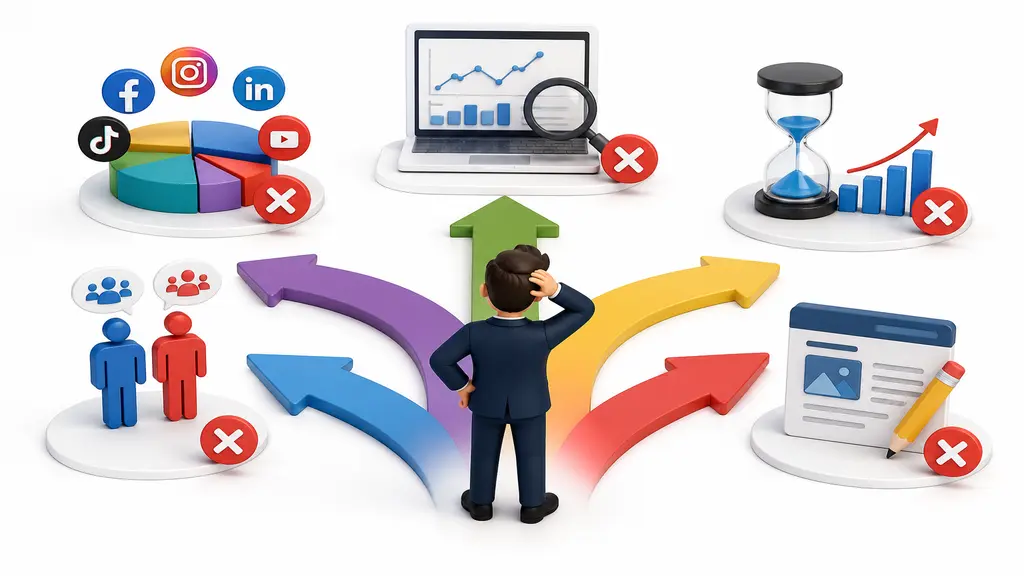
Many businesses invest in digital marketing platforms but still see poor results, usually because of a few simple mistakes.
First, some businesses spread their budget across too many platforms at once, which weakens every single campaign. Instead, it is better to master one or two channels first.
Second, many businesses ignore their analytics data entirely. Since they set up a campaign and forget it, they never get the chance to improve performance.
Third, some expect instant results, when in reality most platforms need testing and time. Naturally, patience almost always leads to better outcomes.
Fourth, businesses sometimes copy a competitor’s strategy without understanding their own audience. However, what works for one brand may not work for another at all.
Finally, many teams forget to update their content regularly, even though search engines clearly favour fresh, active websites. Over time, an untouched blog or page often loses its ranking.
Avoiding these mistakes is not complicated. In fact, it simply takes consistency, patience, and a willingness to learn from your own data.
Conclusion
So, what are digital marketing platforms? Simply put, they are the essential tools that connect your business with the right audience online while letting you measure every result clearly. From search engines to social media to email, each platform plays a different role. Still, the real key to success is not using every tool at once; instead, focus on the platforms that match your goals, budget, and audience. Use them consistently, review your data often, and adjust your strategy whenever needed. Businesses that follow this simple approach will almost always stay ahead in the digital space. Digital marketing, after all, is not a one-time project. Rather, it is an ongoing process that rewards businesses who stay curious and keep testing new ideas. The tools will keep changing, but the core principle will stay the same: understand your audience, meet them where they are, and offer real value. So, start small if you need to. Pick one platform, learn it well, and grow from there. Over time, this simple habit builds a strong and lasting online presence for your business.