Ask ten people who invented Facebook and nine will blurt out the same name in half a second: Zuckerberg. Not wrong, exactly. But that one-word answer skips basically the entire interesting part — and honestly, the “why it still matters” part gets skipped even more. I went through a bunch of old interviews and court records while putting this together (yeah, actually did that), and the real version is messier than the Wikipedia summary suggests. There’s a dorm room involved, a couple of college kids nobody really talks about anymore, and at least one lawsuit that dragged on for years. So let’s actually get into who invented Facebook and why it still matters today — properly this time, not just the one-liner everyone repeats.
Who Invented Facebook? Here’s the Short Version
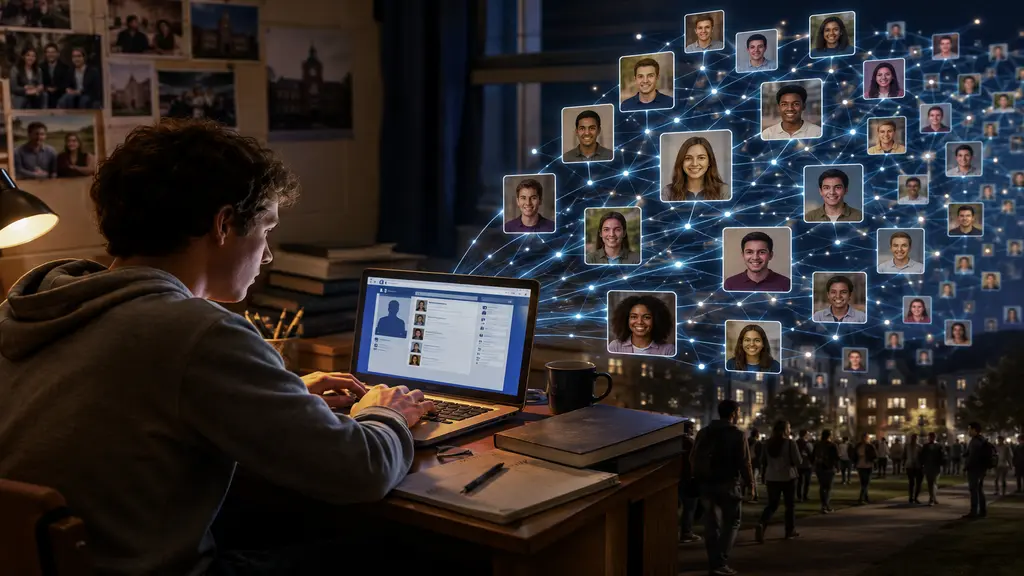
Mark Zuckerberg invented Facebook — that part isn’t really up for debate. He was 19, a Harvard sophomore, and launched the site on February 4, 2004, writing most of the original code himself late at night in his dorm room. But he wasn’t completely alone in pulling it off. A few other names deserve a mention:
- Eduardo Saverin: Put up some of the early money and handled the business side, mainly because Zuckerberg had zero patience for managing a Facebook account.
- Dustin Moskovitz: Got pulled into coding once the site started growing faster than one person could realistically manage
- Andrew McCollum: Worked on how the site actually looked and felt in those early months
- Chris Hughes: Ended up talking to journalists and the press, again because Zuckerberg wasn’t exactly thrilled about doing interviews
None of these four get remembered the way Zuckerberg does today. Kind of unfair if you really sit and think about it, but that’s usually how these founder stories play out.
The Facemash Thing (Before Facebook Was Facebook)
Before any of this, there was Facemash — and it’s honestly a chapter a lot of retellings conveniently leave out. Back in 2003, Zuckerberg pulled photos of Harvard students without asking anyone and built a site where people rated who was more attractive. Harvard shut it down within days, and he nearly got expelled over the whole mess.
Still, something about how fast that thing spread must’ve stuck with him. A few months later he started building TheFacebook.com, Harvard-only at first, sign-up required a harvard.edu email address. As Facebook grew, users eventually began creating and managing multiple Facebook accounts for different purposes. Within two weeks, more than half of Harvard’s undergrads had joined — which honestly still sounds made up when you say it out loud.
Other schools started asking in — Yale, Columbia, Stanford — and Zuckerberg just kept opening it up campus by campus. By the end of 2004, TheFacebook had crossed a million users. From a dorm room to a million people in under a year. That’s the kind of growth most startups today would still kill for.
The Lawsuit That the Movie Made Famous
This part most people already sort of know, mainly thanks to the movie. Cameron and Tyler Winklevoss, along with their classmate Divya Narendra, had hired Zuckerberg earlier that same year to help build their own social network, ConnectU. Then Zuckerberg went off and built his own competing site instead. They weren’t exactly thrilled, to put it mildly.
This thing didn’t get resolved quickly, by the way. Years of legal back-and-forth before both sides finally settled outside of court. Reports differ a bit on the exact number, but the twins reportedly walked away with something close to $65 million.
Was it theft, or just Zuckerberg being faster and sharper than the guys who hired him? People still fight about this on Reddit threads and comment sections to this day. I don’t have a tidy answer for you — I don’t think anyone really does.
If your only exposure to any of this is The Social Network, just know it’s a great movie, not exactly a documentary. Aaron Sorkin dramatized plenty of it for effect.

From Dorm Room to Global Empire
Once Facebook opened up to the public in 2006, growth basically went vertical. Here’s roughly how that timeline played out:
- 2004: Launches at Harvard, spreads quickly to other Ivy League campuses
- 2006: Opens to anyone 13 or older with a valid email address
- 2008: Overtakes MySpace to become the largest social network in the world
- 2012: Goes public via IPO, crosses 1 billion users the same year
- 2021: Rebrands entirely under the name Meta, shifting focus toward VR and the metaverse
What’s kind of wild is thinking about how MySpace used to feel unbeatable back in the day — and now it’s basically a footnote. Twenty-odd years to go from a Harvard side-project to something that shapes how billions of people talk to each other daily. That’s really not that long, when you actually stop and think about it.

Who Invented Facebook and Why It Still Matters in 2026
This is really the heart of it, and it’s the part people skip past too fast. Knowing who built Facebook isn’t just trivia for a pub quiz. It ties directly into stuff we’re all dealing with right now — how our data gets used, how algorithms decide what we see, and how much power a small handful of people hold over what billions of us scroll through every day. Understanding how people use Facebook today also means knowing how to manage your Facebook account effectively.
Facebook (now Meta) still shapes elections, small businesses, family group chats, marketplace sales — basically all of it. Understanding where it came from, who actually built it, and what it took to get there gives you a much better lens for understanding where it’s headed next.
Conclusion
So, who invented Facebook, and why does it still matter? Zuckerberg’s name goes on it, no argument there. But if we’re being fair, Saverin put up the early money, Moskovitz coded through the growing pains, and the Winklevoss twins… well, they’ll always be part of this story whether Zuckerberg’s comfortable with that or not. Throw in a handful of Harvard students who just happened to be around at the right moment in 2004, and you’ve got the real picture — not the tidy one-name version everyone repeats. It started messy. Kind of shady in places, honestly. And somehow it turned into one of the biggest companies humans have ever built — one that still shapes how we live, talk, and think, decades later.
Next time this comes up in conversation, you won’t just have the movie version anymore. You’ll have the actual one.