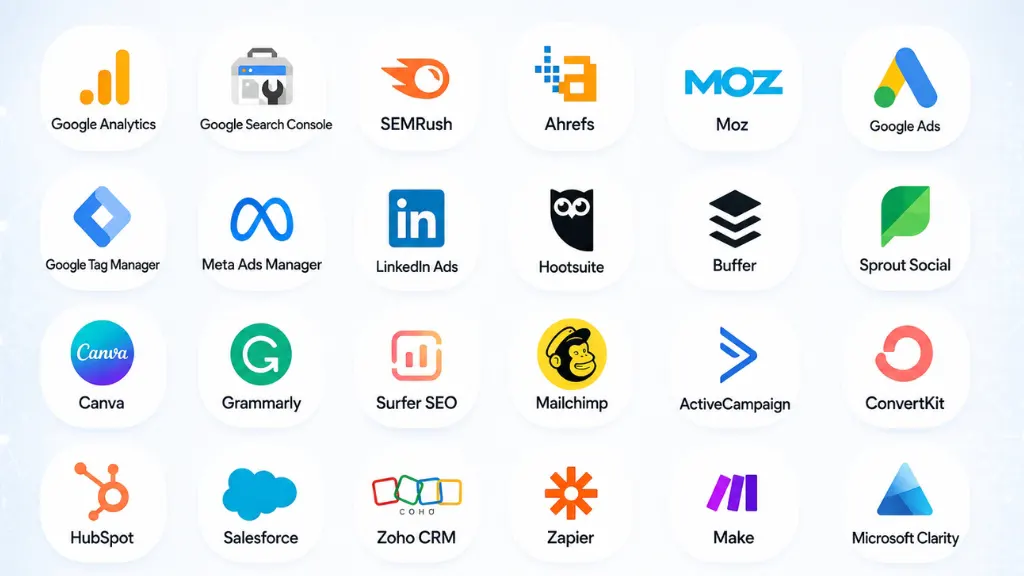
Digital marketing has become one of the most powerful ways for businesses to attract customers, build brand awareness, and increase revenue. However, successful marketing campaigns rarely rely on strategy alone. Marketers use specialized tools to analyze data, manage campaigns, create content, track performance, and improve results.
If you’ve been asking what are the tools of digital marketing, you’re not alone. Business owners, students, and aspiring marketers frequently want to understand which tools professionals use daily.
The good news is that digital marketing tools help simplify complex tasks. Moreover, they allow businesses to make data-driven decisions instead of relying on guesswork.
From SEO platforms and social media schedulers to email marketing software and analytics dashboards, these tools play a critical role in modern marketing success.
In this guide, we’ll explore the most important categories of digital marketing tools and explain how each one supports business growth.
What Are the Tools of Digital Marketing?
Before discussing specific platforms, let’s define what digital marketing tools actually are.
Digital marketing tools are software applications and online platforms that help marketers:
- Research audiences
- Improve website visibility
- Manage advertising campaigns
- Schedule content
- Track performance
- Generate leads
- Analyze customer behavior
These tools help businesses operate more efficiently while improving marketing results.
Because digital marketing involves multiple channels, professionals often use several tools together.
Digital Marketing Tools for SEO?
Search Engine Optimization remains one of the most valuable digital marketing strategies. SEO tools help marketers improve website rankings and attract organic traffic.
Popular SEO tools include:
Google Search Console
Google Search Console helps website owners:
- Monitor search performance
- Identify indexing issues
- Track keyword visibility
- Improve technical SEO
Since Google provides the data directly, this tool remains essential.
Ahrefs
Ahrefs helps marketers:
- Analyze backlinks
- Research keywords
- Monitor competitors
- Track rankings
Many SEO professionals rely on Ahrefs for comprehensive search analysis.
SEMrush
SEMrush provides:
- Keyword research
- Competitor analysis
- Site audits
- Content optimization insights
Because it combines multiple SEO features, many agencies use it daily.
Moz
Moz supports:
- Rank tracking
- Link analysis
- SEO audits
- Keyword research
It remains popular among businesses looking for user-friendly SEO solutions.
Digital Marketing Tools for Analytics?
Data drives successful marketing decisions. Without analytics, marketers cannot accurately measure performance.
Google Analytics
Google Analytics remains one of the most widely used marketing tools.
It helps businesses track:
- Website visitors
- Traffic sources
- User behavior
- Conversions
- Revenue
Consequently, marketers gain valuable insights into customer interactions.
Microsoft Clarity
Clarity provides:
- Heatmaps
- Session recordings
- User behavior analysis
These insights help improve website usability and conversion rates.
Looker Studio
Looker Studio creates customized marketing reports and dashboards. Businesses use it to visualize performance data from multiple platforms.
Digital Marketing Tools for Social Media Management?
Managing multiple social platforms manually can become overwhelming. Social media management tools simplify content scheduling and reporting.
Hootsuite
Hootsuite allows marketers to:
- Schedule posts
- Monitor engagement
- Track social performance
- Manage multiple accounts
Buffer
Buffer focuses on content scheduling and performance analysis. Its simple interface makes it popular among small businesses.
Sprout Social
Sprout Social offers:
- Social listening
- Analytics
- Team collaboration
- Customer engagement tools
As a result, larger organizations often choose it for advanced management.
Digital Marketing Tools for Content Marketing?
Content remains a critical part of digital marketing. However, creating effective content requires research and planning.
Grammarly
Grammarly helps improve:
- Grammar
- Clarity
- Readability
- Professional writing quality
Surfer SEO
Surfer SEO assists with content optimization by analyzing top-ranking pages. Marketers use it to improve search visibility.
Canva
Canva simplifies graphic design.
Businesses use it to create:
- Social media graphics
- Blog images
- Marketing materials
- Presentations
Because visual content influences engagement, Canva has become a favorite among marketers.
Digital Marketing Tools for Email Campaigns?
Email marketing continues delivering one of the highest returns on investment among marketing channels. Several tools help automate and optimize email campaigns.
Mailchimp
Mailchimp supports:
- Email automation
- Audience segmentation
- Campaign management
- Performance tracking
ActiveCampaign
ActiveCampaign combines:
- Email marketing
- Marketing automation
- CRM functionality
ConvertKit
ConvertKit serves content creators and online businesses with simplified email automation. Effective email tools help businesses nurture leads and build long-term customer relationships.
Advertising and PPC Management Tools
Paid advertising requires constant monitoring and optimization. Several platforms simplify campaign management.
Google Ads
Google Ads helps businesses:
- Run search campaigns
- Display advertisements
- Generate leads
- Track conversions
Meta Ads Manager
Meta Ads Manager supports advertising on:
Marketers can target specific audiences and measure campaign performance.
LinkedIn Campaign Manager
LinkedIn advertising helps B2B companies reach decision-makers and professional audiences.
Customer Relationship Management Tools
Marketing and sales often work together. CRM tools help businesses manage customer interactions.
HubSpot
HubSpot provides:
- CRM functionality
- Marketing automation
- Email marketing
- Lead management
Salesforce
Salesforce remains one of the most powerful CRM platforms available. Large organizations often rely on it for advanced customer management.
Zoho CRM
Zoho offers affordable CRM solutions for growing businesses. Because customer relationships drive revenue, CRM tools play an increasingly important role in digital marketing.
Conclusion
Understanding the tools of digital marketing helps businesses and marketers build more effective campaigns.
From SEO platforms and analytics tools to social media schedulers and CRM systems, these solutions improve efficiency, provide valuable insights, and support business growth.
The best marketers combine strategy, creativity, and technology. While tools cannot replace expertise, they make it easier to execute campaigns, track results, and optimize performance.
Whether you’re a beginner or an experienced professional, investing time in learning the right marketing tools can significantly improve your results.
FAQ's
Some of the most important tools include Google Analytics, Google Search Console, Ahrefs, SEMrush, Mailchimp, Canva, and HubSpot.
Many tools offer free versions, while advanced features typically require paid subscriptions.
Popular SEO tools include Ahrefs, SEMrush, Moz, and Google Search Console.
Analytics tools help measure traffic, conversions, user behavior, and campaign performance.
Yes. Even small businesses benefit from tools that improve efficiency, visibility, and customer engagement.